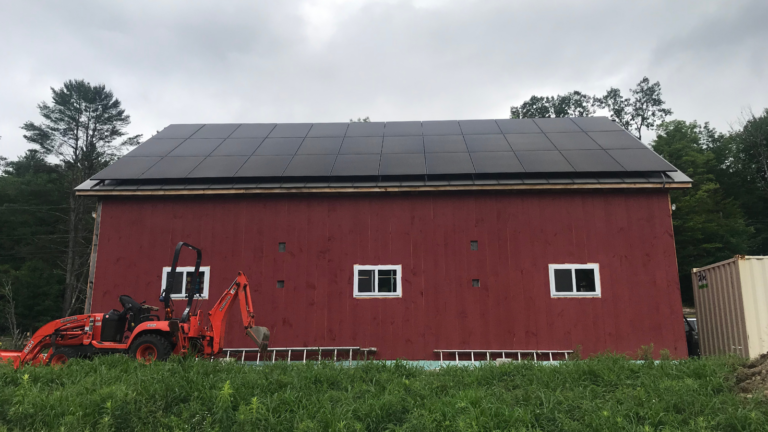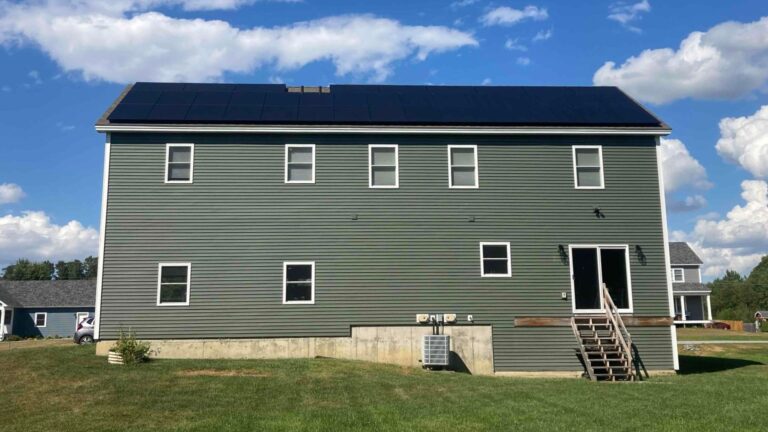
Short answer: It’s not our first choice. Find out why, and what the safe alternatives are.
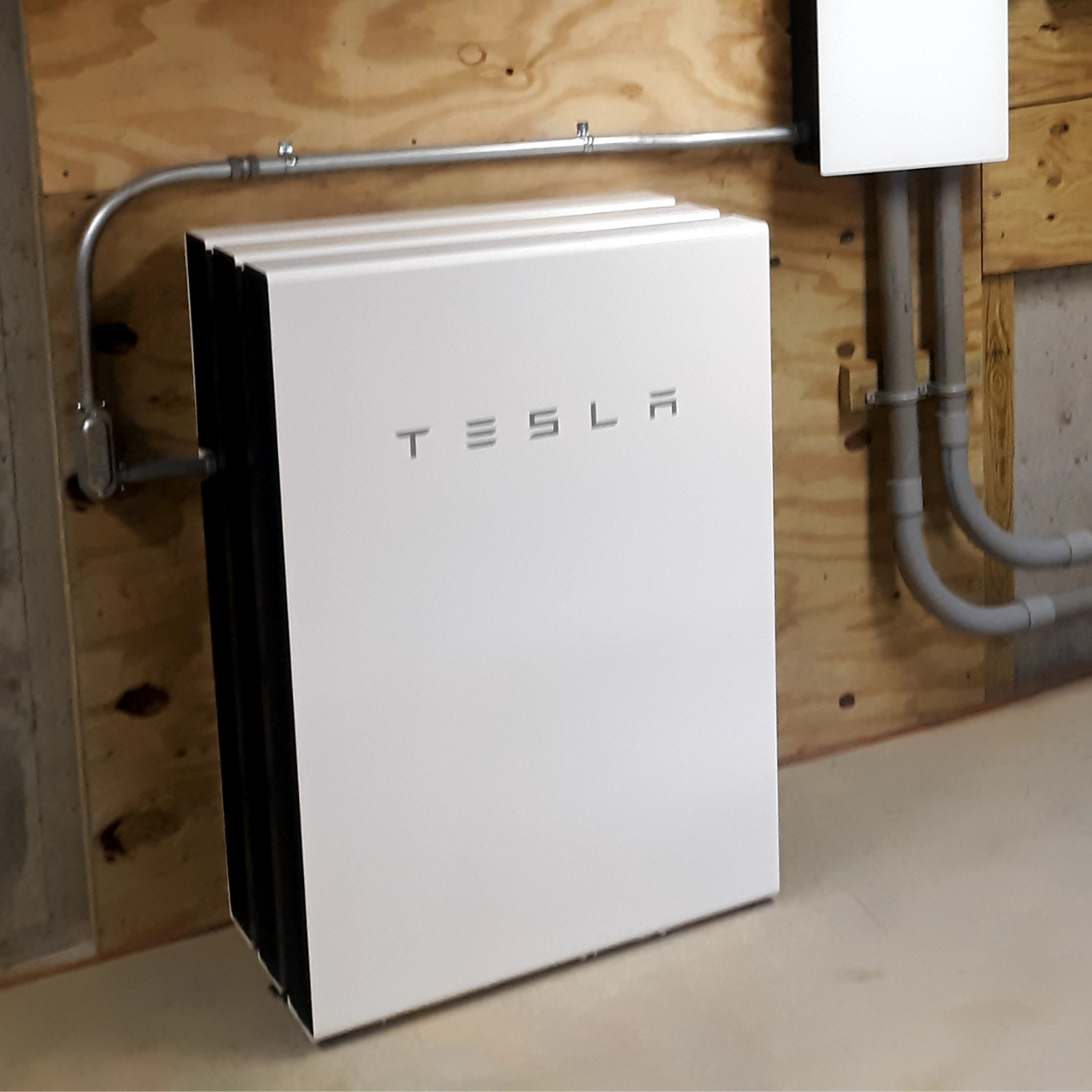
 If you’ve been browsing battery backup options, we’d bet you’ve come across more than one photo of a Tesla Powerwall or other energy storage option hanging in a garage or outside in a modern carport. That may work in cozy climates like Arizona, but in frosty Vermont, that isn’t going to fly. Here are the reasons we are selective about where to store your solar battery bank.
Key Takeaways
- Tesla Powerwall, Franklin Whole Home, and Enphase batteries are all rated for outdoor use, but Vermont winters make indoor placement the smarter call.
- When temperatures drop below freezing, a battery burns its own stored energy just to stay warm, which is energy you paid to store for your home.
- Basements and heated garages keep batteries closer to their ideal 50 to 77°F range, protecting both performance and warranty coverage.
- Green Mountain Power runs two programs (ESS lease and BYOD) that pair with home battery installs in Vermont, and our team handles the application paperwork.
Can Solar Batteries Be Stored Outside?
Technically, yes. Consider the rating system on the battery backup storage Green Mountain Solar prefers to use, the Tesla Powerwall. The Tesla Powerwall gets two scores on an IP scale(Ingress protection; how effective this device is from blocking foreign objects) from 0-6, the first number measuring intrusion protection (small sediment) and the second, moisture protection. The Tesla Powerwall is rated IP56 for the wiring component and IP67 for battery and power electronics. Overall, this rating suggests great quality, and resilience against environmental degradation, and is overall outdoor rated.
Keyword: “overall.” Anyone who has lived in Vermont knows that our winters aren’t your run-of-the-mill winters. Due to the cold temperatures Vermont experiences in the winter months, Green Mountain Solar has found that it is not ideal to place a solar battery outside, or anywhere that is not temperature controlled.
The Powerwall isn’t the only battery we install. The Franklin Whole Home battery and the Enphase IQ Battery 10C are both rated for outdoor installation as well. Here’s how all three compare on paper:
A weather rating tells you the enclosure can survive outside. It doesn’t tell you how the cells inside will perform once the mercury drops, and in Vermont that’s the part that matters.
Learn About Vermont Utility Battery Backup Programs Here
Why Cold Batteries Aren’t Ideal
Batteries will operate just fine down to below freezing, but after that, the Powerwall uses some energy to keep itself warm. Because this does reduce battery efficiency, Green Mountain Solar generally does not recommend installing batteries in unheated garages or places that get below freezing.
According to Green Mountain Solar operations supervisor, Ben McFeeters, “As the temperature of your Powerwall decreases, it will limit the amount of energy you are able to discharge and will begin using a portion of the energy storage to maintain a higher temperature. The optimal operating temperature is 77 degrees Fahrenheit.” These are general ranges and our team will assess your site to find the location that makes the most sense.
Read More on How To Use Solar Backup Batteries in Vermont
Where to Store My Solar Battery Bank
It will always be best practice to protect your Battery Powerwall from the freezing temperatures we experience in Vermont. At Green Mountain Solar we will always recommend placing your solar backup battery in a climate-controlled area, like a basement or heated garage, to ensure you receive the highest battery performance and lifecycle of your investment.
—Lilly Baron
Click Here To Get Started With Battery Backups
Frequently Asked Questions
What temperature range do solar batteries need?
Most lithium-ion batteries operate safely between -4°F and 122°F, but they perform best between 50°F and 77°F. Sustained operation below freezing reduces capacity and, in some cases, affects warranty coverage.
Can I put a Tesla Powerwall in an unheated garage?
Technically, yes. The Powerwall 3 is rated down to -4°F. In practice, we steer Vermont customers toward a heated space because winter performance suffers in an unheated garage, especially in central and northern Vermont.
Which solar battery handles cold weather best?
Franklin WH and Powerwall 3 both have built-in thermal management, which means they warm themselves in cold weather. Enphase 10C does not, which makes it a better fit for an indoor install in Vermont. Performance differences shrink when all three are kept in a basement.